

Production line for prebaked anodes for electrolytic aluminum
Prebaked anode is a type of carbon for aluminum, belonging to the supporting industry of the aluminum industry and one of the main raw materials for electrolytic aluminum. According to relevant statistics, electrolytic aluminum enterprises need about 0.49~0.53 tons of prebaked anode to produce 1 ton of electrolytic aluminum. It is an irreplaceable consumable material in the current electrolytic aluminum process and an important consumable in the aluminum smelting process. Prebaked anodes have good electrical conductivity and high-temperature corrosion resistance, and are called the "heart" of the electrolytic cell, so the quality of the anode directly affects the current efficiency, anode consumption, and the quality of the primary aluminum.
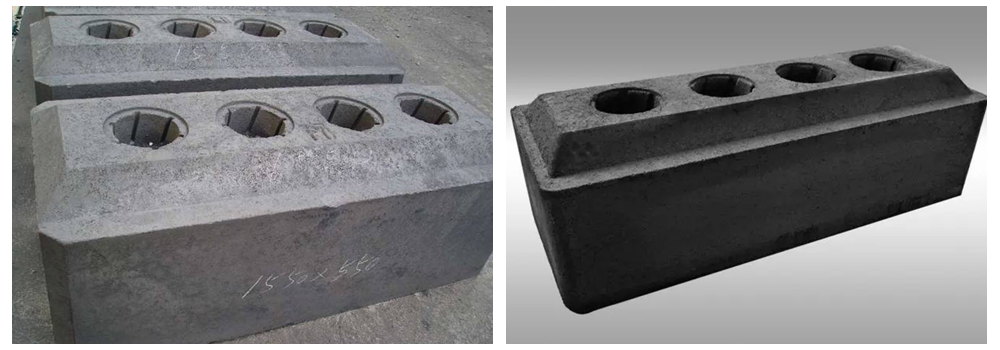
Prebaked anode is actually a comprehensive resource utilization product. The specific production process uses petroleum coke, a byproduct of the petrochemical industry, as the aggregate and coal pitch, a byproduct of the coal chemical industry, as the binder. After mixing and molding, it forms a blank of a certain shape. After heat treatment, the binder is carbonized to obtain a product with higher mechanical strength and oxidation resistance, thus producing an anode product with lower resistivity.
The production of prebaked anodes for aluminum generally uses petroleum coke and coal pitch as raw materials, and sometimes a small amount of raw and cooked scraps (raw scraps are obtained by crushing unqualified raw anodes, and cooked scraps are obtained by crushing unqualified anode products) will be added. After calcining, petroleum coke is crushed, screened, proportioned, kneaded, and molded through multiple processes to produce semi-finished products, and finally baked to obtain finished prebaked anodes.
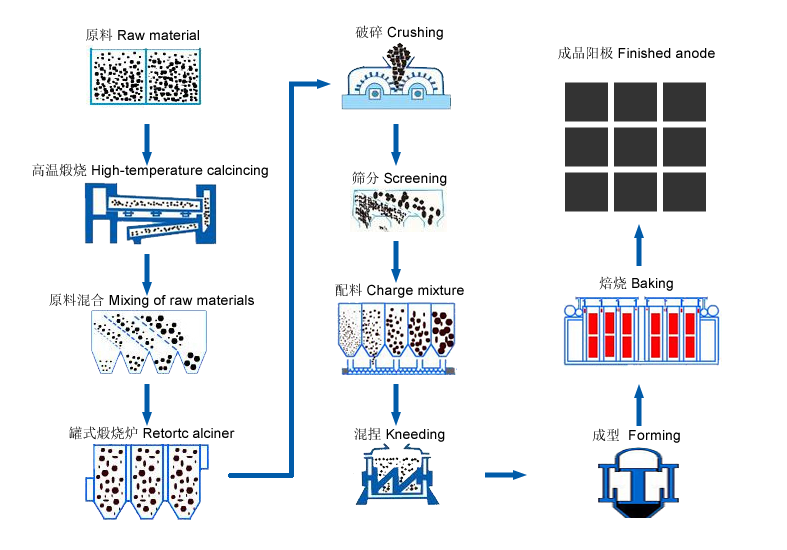
The production process of prebaked anode:
1. Raw materials. Prebaked anodes use low-ash raw materials. Petroleum coke and spent anodes are used as aggregates, and their impurity content is generally no more than 0.5%. The binder is coal pitch. Modified asphalt or high-temperature asphalt is widely used as a binder for prebaked anodes.
2. Calcination. Petroleum coke is calcined in a rotary kiln at a high temperature of around 1250 degrees.
3. Crushing and screening. The calcined petroleum coke and spent anodes are crushed, screened and ground into materials of different strengths according to the formula requirements, and then put into their respective bins.
4. Proportioning. Proportioning is carried out according to the set formula. There are two types of prebaked anode formulas: large particle size formula and small particle size formula. The maximum particle size of the aggregate is 12mm~15mm, and the amount of coal pitch varies depending on the dry material formula and molding process, generally 16%~18%.
5. Kneading. An intermittent horizontal twin-shaft kneader or continuous kneader is used to mix and knead the aggregate and binder to form a plastic paste.
6. Molding. A special vibration molding unit is used to mold the paste into prebaked anode blanks under high-frequency vibration.
7. Baking. The baking heat treatment of prebaked anodes mostly uses an open-type baking furnace.
8. Cleaning and processing. The baked prebaked anode blocks are slightly cleaned, and after inspection, they can be shipped.
Furnace types used: Calcination furnace, Baking furnace
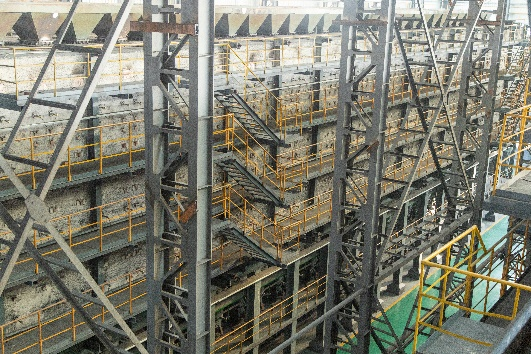
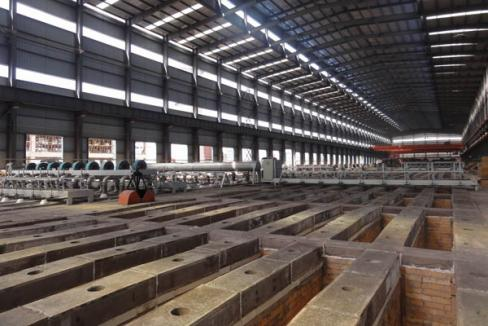

Explore our products and services
If you have any needs, please contact us! Huanggang Huayao Zhonghui Kiln Co., Ltd. is willing to cooperate sincerely with customers at home and abroad, seek common development, and create brilliance together.
Huanggang Huayao Zhonghui Kiln Co., Ltd.
Telephone: 86-713-8696198
Mobile: 86-13607255393
Email: hbzhmch@163.com
Address: No. 8, Huanwu Road, Huangzhou District, Huanggang City, Hubei Province

WeChat Official Account
Copyright © 2025 Huanggang huayao zhonghui kiln co., Ltd. All rights reserved. Powered by:300.cn · Privacy Agreement