

New Carbon Making Technology - New Type of Carbon Calcination Furnace
Category: Technical exchange
Release time: 2025-05-26
Summary: Calcination is an important process in the production of carbon products.
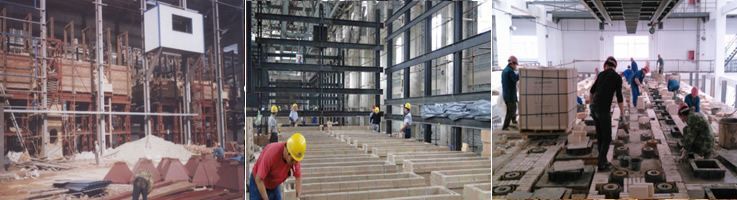
Calcination is an important process in the production of carbon products, and its calcination quality has a significant impact on the quality of the products and the technical indicators of subsequent processes, which is an important guarantee for producing qualified carbon products. The calcination process can cause complex physical and chemical changes in coke, resulting in the discharge of volatile matter, moisture, increased density, and conductivity. At the same time, the coke structure shrinks, the microstructure becomes regular, structural defects are compensated for, and high-quality calcined coke is generated. At present, mature carbon calcination systems such as petroleum coke calcination systems can meet the requirement of shorter calcination cycles. However, due to cooling and poor corrosion resistance to fluorides in the carbon recovery industry, their adaptability and yield are relatively low. Taking the widely used petroleum coke rotary kiln calcination furnace as an example, the refractory material used is Si3N4 or SiC, and heat is sent into the rotary kiln body to calcine the carbon powder, which greatly limits its cooling rate. At the same time, there is a small amount of fluoride salt in the electrolytic aluminum carbon waste, which forms fluoride salt vapor during high-temperature calcination and reacts with refractory materials to form SiF4, leading to deterioration of the working environment at the kiln head and greatly affecting the quality of the final carbon product. The production process of rotary kiln calcined coke is widely used in China for the production of calcined petroleum coke. According to incomplete statistics, there are 43 rotary kiln calcined coke plants in China, with an annual output of about 4.5 million tons, accounting for 56% of the total domestic output. However, in the production process, there are generally problems such as high energy consumption, significant burn damage, and unstable product quality. Taking Guizhou Aluminum Plant as an example, the calcination system used is a rotary kiln with a specification of Φ 2.2mX45m and a designed production capacity of 6t/H, mainly for the calcination process of petroleum coke. The temperature of the rotary kiln head is about I200 ° C, and there is no rapid cooling at the kiln tail. The high-temperature carbon powder after calcination is easy to burn in the air, which can lead to burn damage. At the same time, the refractory lining is made of Si compound refractory material, which cannot effectively resist fluoride corrosion. The mature carbon calcination furnace technology, carbon calcination rotary kiln, consists of a whole body, support device, transmission device, tertiary air device, kiln head cover, kiln tail cover, kiln head and tail seal, stop wheel, etc. The refractory material is set on the inner wall of the cylinder and kiln head and tail cover. The high-temperature gas generated by the combustion in the rear combustion chamber is sent into the kiln body from the kiln head, but the high-temperature gaseous flow does not isolate the air and directly contacts the solid flow, achieving calcination in the refractory lining kiln body. At the same time, the temperature gradient change from the kiln head to the kiln tail is achieved, which is limited by high temperature. However, it still cannot achieve fluorine corrosion resistance and rapid cooling. To achieve high production, a very large calcination system must be designed, and its yield is relatively low. At the same time, other carbon calcination furnace technologies in China commonly use a refractory material to separate the coke and the flue during carbon calcination in order to isolate the air, which greatly limits the calcination temperature. The gaseous and solid streams do not come into direct contact. With the development of industry, carbon is separated and purified from waste, and then calcined into coke to achieve the reuse of waste. It is necessary to optimize the carbon calcination process, shorten the production cycle, reduce various production consumption indicators, strive to fully calcine volatile matter, reduce flue gas emissions, lower the workload of environmental protection equipment, and reduce tar emissions to achieve energy conservation and emission reduction.
Keywords: New Carbon Making Technology - New Type of Carbon Calcination Furnace
Related Information
Technical exchange
-
Negative electrode material: in-depth analysis of graphitization
Time:2025-05-26
-
Horizontal continuous graphitization technology for negative electrode materials
Time:2025-05-26
-
New Carbon Making Technology - New Type of Carbon Calcination Furnace
Time:2025-05-26
-
Carbon Products Professional Production Equipment Carbon Baking Furnace
Time:2025-05-26

Explore our products and services
If you have any needs, please contact us! Huanggang Huayao Zhonghui Kiln Co., Ltd. is willing to cooperate sincerely with customers at home and abroad, seek common development, and create brilliance together.
Huanggang Huayao Zhonghui Kiln Co., Ltd.
Telephone: 86-713-8696198
Mobile: 86-13607255393
Email: hbzhmch@163.com
Address: No. 8, Huanwu Road, Huangzhou District, Huanggang City, Hubei Province

WeChat Official Account
Copyright © 2025 Huanggang huayao zhonghui kiln co., Ltd. All rights reserved. Powered by:300.cn · Privacy Agreement